

When I designed for Frida, I have consulted a fashion designer from Mexico. The hairstyle of the puppet has reproduce the traditional Mexican hairstyle “Trenza de bola”. And for its clothes, I have chose Frida Kahlo` s favorite Mexican traditional dress “Traje de Tehuana”, but the style is closer to the Design as a fashion icon in current fashion area. With the new look of Frida, I want to show her distinct personality, her special interest and unique taste of fashion.

When I designed for Marie, I have reproduce her blond hair, grey eyes, light skin and her typical serious expression. The puppet has two sets of clothes: a dark blue old working dress, which she often wears outside other clothes when she works, and a white shirt with black skirt, which have simple style with a little lace as decoration. The outer plain working dress and the inner simple style shirts and skirts represent different images of Marie in work and life: strict scientist, knowledgeable professor and graceful woman with independent thoughts and unique ideas about aesthetic.

Frida` s father is a photographer from Germany. When he was 18, he came to Mexico alone. After many years in Mexico, he opened his own photography studio in Mexiko-Stad. His career as a photographer and his passion of watercolors has deeply affected Frida's interest in painting and art. Kahlo's design comes from Frida's family photos and Frida's painting for his father. He is serious and reticent. In the portraits, he always wears a dark, old-fashioned suit with meticulous hair.

Because of the health problems of Frida, her doctors had always played an important role in her life. Hand-Puppet doctor was designed based on a portrait of Frida` s doctor, which was draw by Frida. Interestingly, her doctor has the same eyebrow like hers. The the form and color of curtain has imitated Frida` s former residence—“the blue hause”.
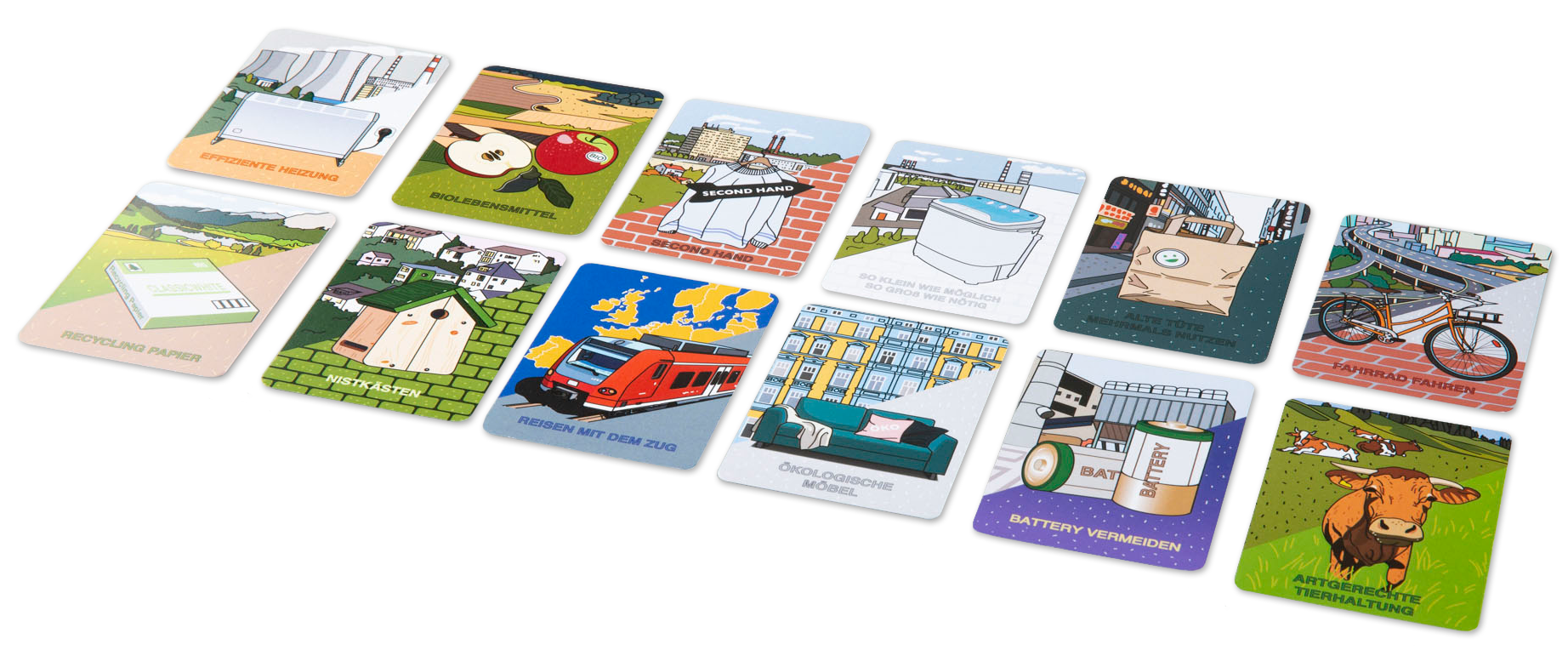
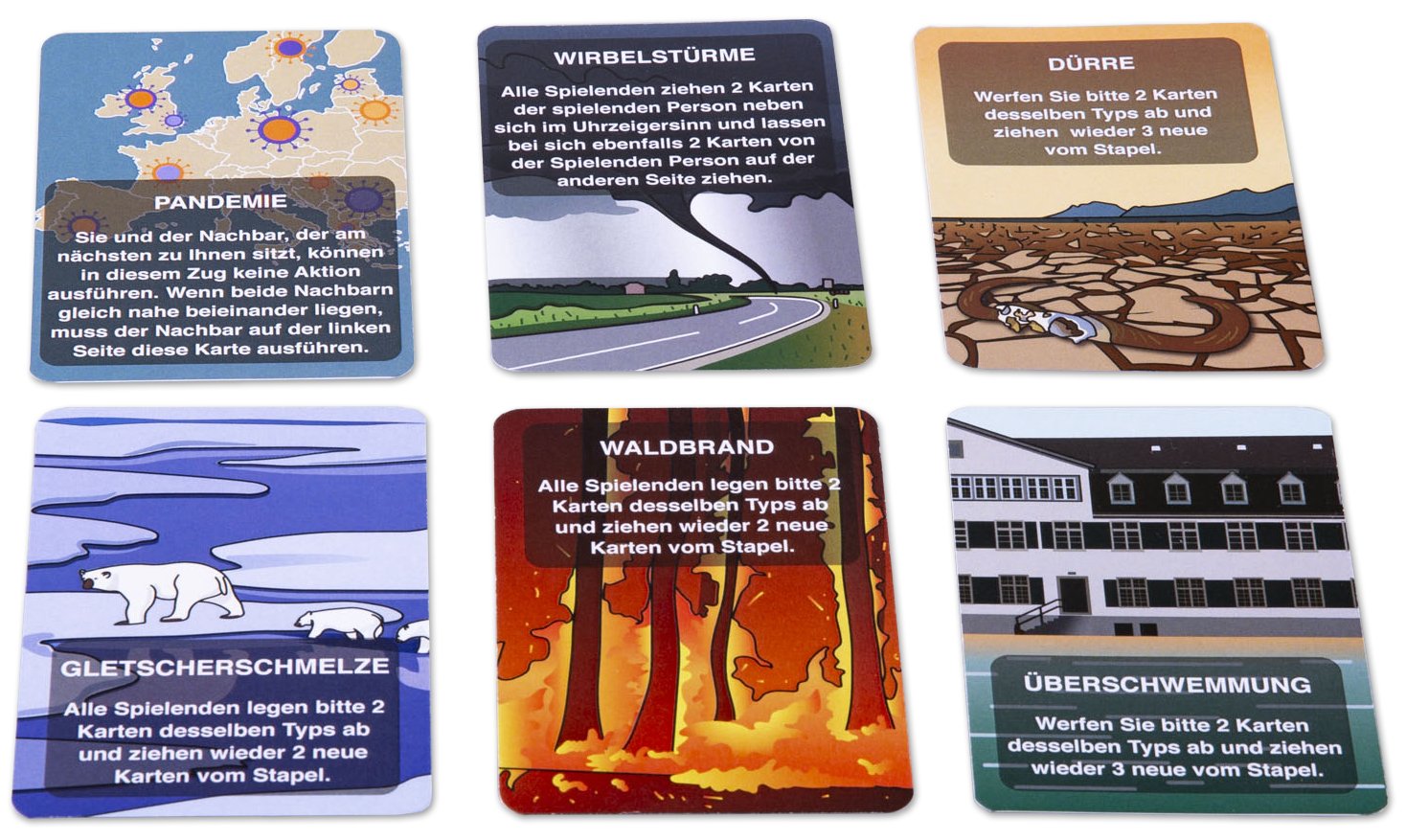
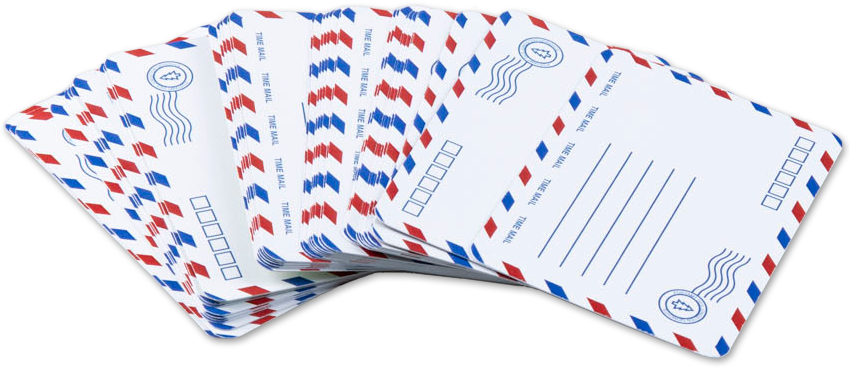
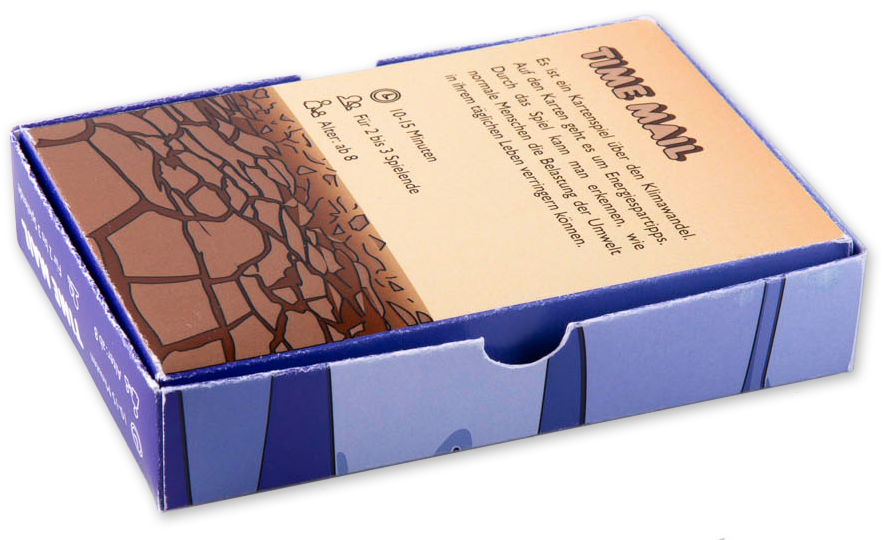
The rules of the game are introduced through a story. The story takes place 30 years in the future on Earth. At this time, the earth is being hit by climatic disasters and life is difficult for people. The players take on the role of time travelers whose task is to send letters with advice on climate protection to the past so that the people of that time can live in a climate-friendly way and therefore change the fate of the people of tomorrow.
Preparation: To start the game, "ClimateTip" cards, "Catastrophe" cards, and a "Population Growth" card are shuffled together and stacked face down. Each person playing draws 12 cards at the beginning of the game. If a "Disaster" card has already been drawn at the beginning, it must be put back into the pile and a new card is drawn.
One turn: In one turn, each person draws a card in turn in a clockwise direction and puts one card down. The players can draw a new card from the deck or pick up a card that another person has discarded. However, one can only choose one of two actions, either pick up cards from the discard pile or draw from the face-down pile, not both. If a playing person draws a "Disaster" or "Population Growth" card during the game, they must immediately play it and draw a new "ClimateTip" card from the deck.
Game objective: The objective of the game is to gradually replace the 12 different "ClimateTip" cards in your hand by playing and drawing (or picking up) cards to form a deck of 3 sets of the same type with 4 cards of each type.
Winning: The end of the game that correctly collects a set of cards and successfully delivers them wins.